Pickled Red Cabbage with Sumac Recipe
Introduction
This pickled cabbage recipe offers a tangy and vibrant twist on a classic vegetable side. With sumac adding a subtle citrusy note, the cabbage becomes a flavorful, crunchy addition to any meal. It’s quick to prepare and perfect for adding a pop of color and zest to your table.
Ingredients
- 1 head red cabbage (about 2 pounds), quartered and cored
- 1 tablespoon sumac
- 2 tablespoons Kosher salt
- 1 cup distilled white vinegar
- 1 cup water
Instructions
- Step 1: Chop the cabbage quarters in a large food processor fitted with an S-blade by pulsing short and quick until the cabbage is chopped into small, confetti-sized pieces. Transfer the chopped cabbage to a large colander.
- Step 2: Rinse the cabbage well under cold water and shake the colander vigorously to remove excess water.
- Step 3: Transfer the drained cabbage to a large mixing bowl. Add the sumac and Kosher salt, then massage the mixture with your hands until well combined. Let it rest for about 15 minutes.
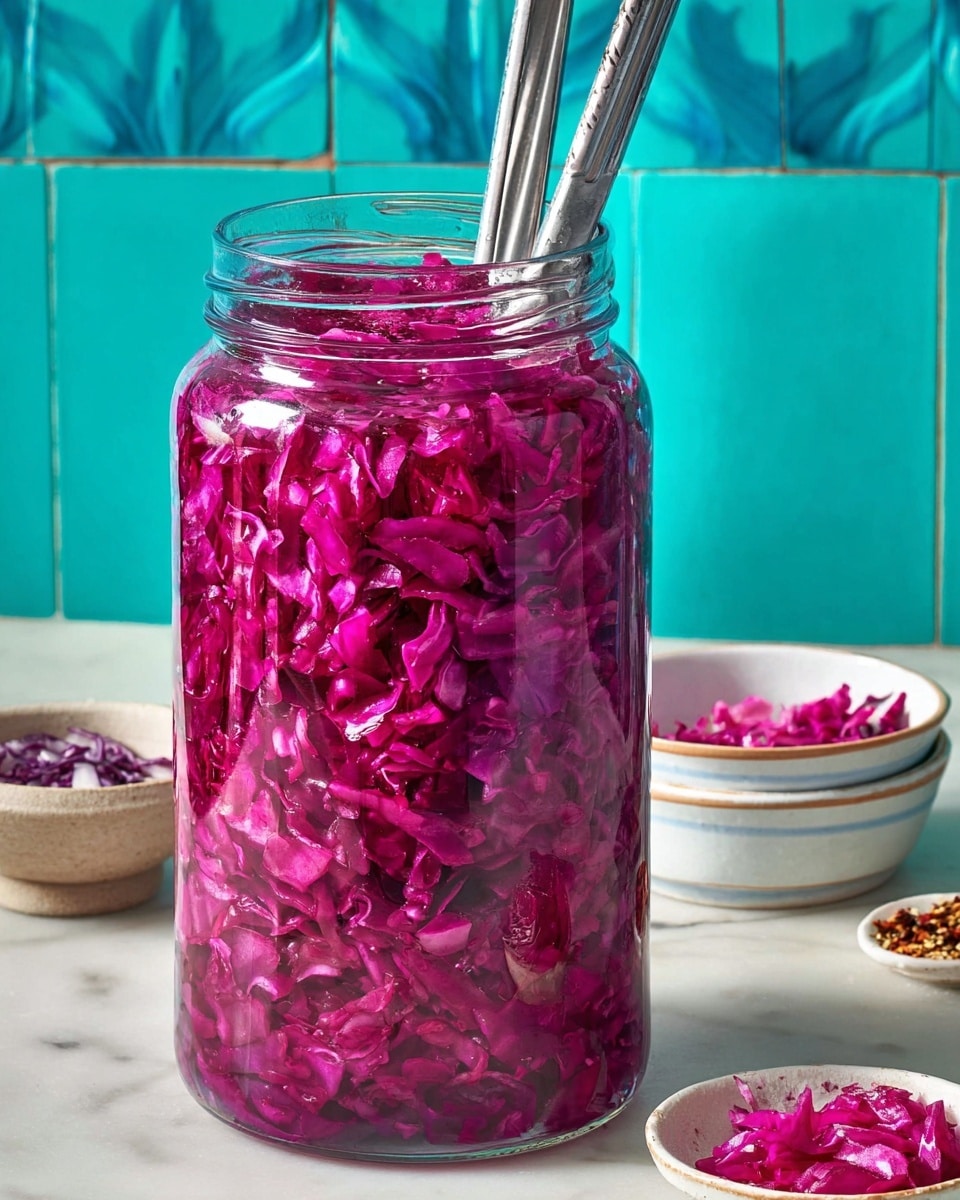
- Step 4: Pour in the vinegar and water, mixing thoroughly to combine. Transfer everything, including the liquid, into a large half-gallon mason jar or several smaller jars. Press the cabbage down firmly to ensure it is submerged in the liquid.
- Step 5: Seal the jar(s) with a lid and refrigerate for at least 3 hours before serving to allow the flavors to develop.
Tips & Variations
- For extra crunch, add thinly sliced carrots or radishes before pickling.
- If you prefer a sweeter pickle, add a teaspoon of sugar or honey to the vinegar mixture.
- Use purple or green cabbage for variations in color and flavor.
- Massage the cabbage gently but thoroughly to help release its natural juices and improve texture.
Storage
Store the pickled cabbage in a sealed jar in the refrigerator. It will keep well for up to 4 weeks. Before serving, give the jar a gentle shake or stir to redistribute the flavors. Enjoy chilled for the best texture and taste.
How to Serve
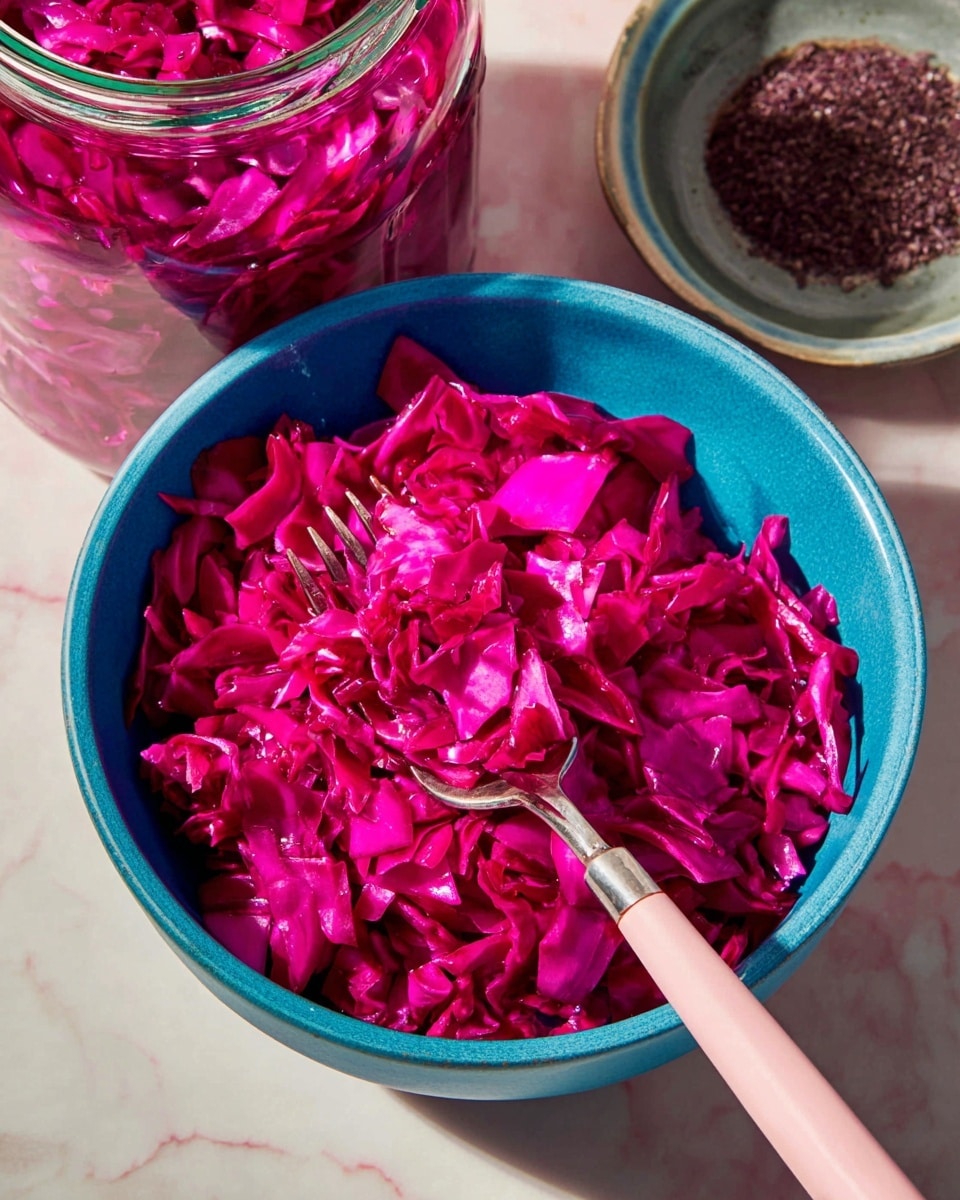
Serve this delicious recipe with your favorite sides.
FAQs
Can I pickle cabbage without a food processor?
Yes, you can finely shred the cabbage with a sharp knife or a mandoline slicer instead of using a food processor.
How long should I wait before eating pickled cabbage?
It’s best to refrigerate the cabbage for at least 3 hours before eating, though letting it sit overnight will deepen the flavors.
PrintPickled Red Cabbage with Sumac Recipe
This vibrant Pickled Cabbage recipe features finely chopped red cabbage seasoned with sumac and kosher salt, then quickly pickled in a tangy vinegar and water brine. The result is a crisp, flavorful condiment perfect for adding a bright, zesty crunch to sandwiches, salads, or as a side dish. Made using a simple no-cook method, it comes together effortlessly and stores well in the fridge for weeks.
- Prep Time: 15 minutes
- Cook Time: 0 minutes
- Total Time: 3 hours 15 minutes
- Yield: About 6 cups 1x
- Category: Condiment
- Method: No-Cook
- Cuisine: Middle Eastern
- Diet: Vegan
Ingredients
Produce
- 1 head red cabbage (about 2 pounds), quartered and cored
Seasonings
- 1 tablespoon sumac
- 2 tablespoons kosher salt
Liquids
- 1 cup distilled white vinegar
- 1 cup water
Instructions
- Chop the cabbage: Place the quartered red cabbage into the bowl of a large food processor fitted with an S-blade. Pulse in short, quick bursts until the cabbage is chopped into small, confetti-sized pieces. Transfer the chopped cabbage to a large colander.
- Rinse the cabbage: Rinse the cabbage thoroughly under cold running water to remove excess salt and any impurities. Shake the colander vigorously to expel as much water as possible.
- Season the cabbage: Transfer the drained cabbage into a large mixing bowl. Add the sumac and kosher salt, then massage the mixture well with your hands. This helps to soften the cabbage and evenly distribute the flavors. Let it rest for about 15 minutes.
- Pickle the cabbage: Pour in the distilled white vinegar and water, mixing well to combine all ingredients. Transfer the cabbage mixture along with the liquid into a large (half-gallon) mason jar or smaller jars, packing the cabbage down tightly to ensure it is fully submerged. Seal the jar(s) with a lid.
- Refrigerate and serve: Refrigerate the jarred cabbage for at least 3 hours before serving to allow flavors to develop. The pickled cabbage can be stored in the refrigerator for up to 4 weeks.
Notes
- Ensure the cabbage is fully submerged in the brine to prevent spoilage.
- Massaging the cabbage with salt and sumac helps release moisture and enhances flavor absorption.
- You can substitute distilled white vinegar with apple cider vinegar for a slightly different tang.
- Use clean jars and lids to maintain freshness and prevent contamination.
- This pickled cabbage adds a wonderful crunch to sandwiches, salads, and grain bowls.
Keywords: pickled cabbage, quick pickles, sumac cabbage, easy pickled vegetables, vegan condiment, refrigerator pickles